Wholesale Non Alcoholic Cocktail Guide
A guest asks for something celebratory, alcohol-free, and actually worth ordering. That moment is where a good beverage program either feels current or falls behind. A strong wholesale non alcoholic cocktail guide starts there - not with trend reports, but with the real expectation that alcohol-free options should feel as polished, flavorful, and occasion-ready as everything else on the menu or shelf.
For retailers, bars, cafes, hotels, and distributors, the category has moved well beyond a token sparkling water or a syrup-heavy mocktail. Customers want the structure of a cocktail, the ease of a ready-to-serve format, and the confidence that choosing not to drink alcohol does not mean opting out of the experience. Buying well at wholesale means understanding what sells, what repeats, and what helps people say yes on the first glance.
What a wholesale non alcoholic cocktail guide should help you solve
At the wholesale level, the question is not simply whether non-alcoholic cocktails are popular. It is whether a product earns its place in limited fridge space, back-bar real estate, or menu design. Buyers need options that look premium, taste credible, and work across different occasions without creating unnecessary complexity for staff.
That is why ready-to-drink formats are gaining traction. They remove the operational drag of building alcohol-free cocktails from scratch while still delivering a finished, elevated serve. In a busy bar, that means speed and consistency. In retail, it means a product customers can understand immediately. In hospitality, it means a more inclusive offer that does not feel like an afterthought.
The strongest wholesale choices tend to do three things at once. They meet growing demand for moderation, they preserve the social ritual of cocktails, and they fit into real-world business constraints such as storage, margin, training, and turnover.
How to evaluate wholesale non alcoholic cocktails
Taste comes first. That sounds obvious, but this category still suffers from products that lead with absence rather than quality. Buyers should be looking for drinks with definition and balance - citrus that feels bright rather than sharp, ginger that lands as crisp rather than harsh, mint that tastes fresh rather than candied. If a product is inspired by a classic cocktail, it should honor what made the original appealing in the first place.
Texture matters almost as much as flavor. A non-alcoholic cocktail can be well made and still feel thin if it lacks body or structure. Customers may not describe that issue directly, but they notice it. The most successful products create a sense of occasion through finish, aroma, and layering, not just sweetness.
Packaging also deserves a closer look than many buyers give it. A can or bottle is not only a vessel - it is part of the selling experience. Premium design helps in retail environments, but it also matters on tables, bar tops, and room service trays. If the product looks considered, it signals that the drinking experience will be too.
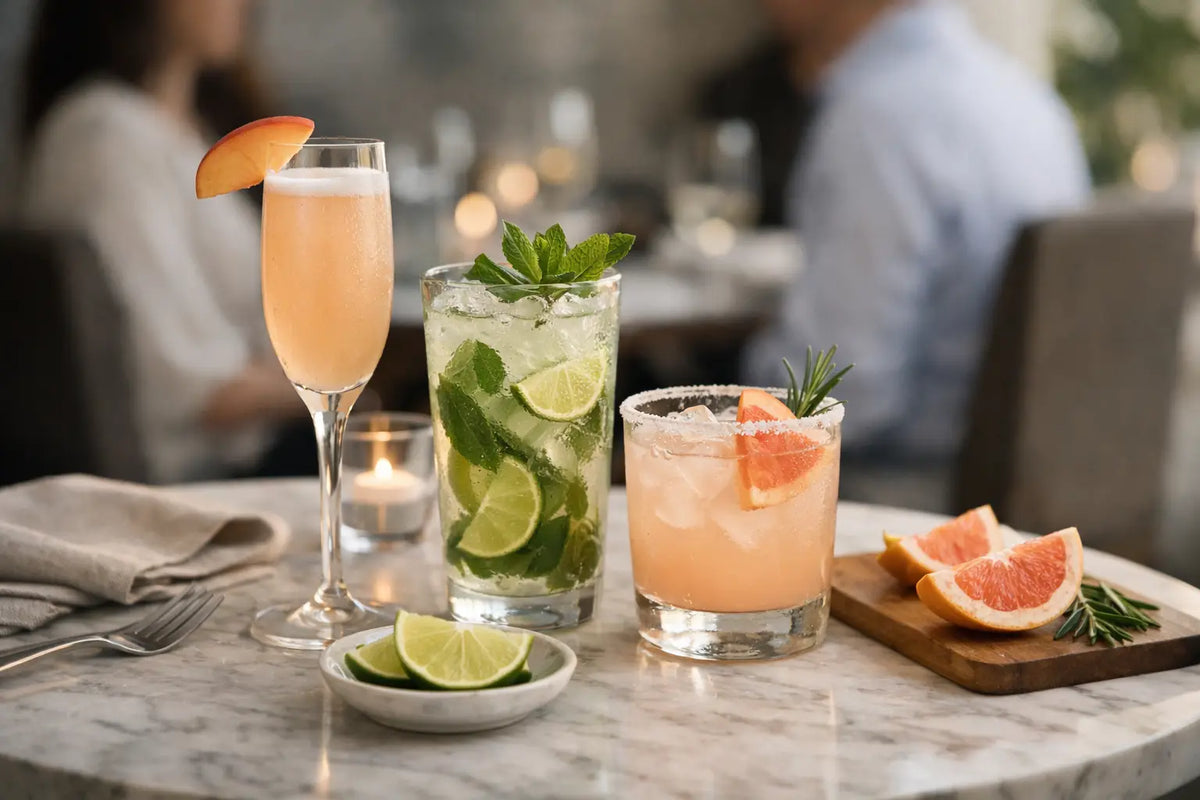
Then there is versatility. Some products are excellent in one setting and weaker in another. A ready-to-drink Bellini might perform beautifully in brunch accounts and premium retail, while a Moscow Mule-style serve may have broader day-to-night appeal. The right mix depends on your customer base, but flexibility usually wins in wholesale because it helps one SKU work harder across more occasions.
The buying criteria that affect margins and repeat sales
A premium alcohol-free drink needs to earn repeat purchase, not just curiosity. That often comes down to the gap between first impression and second experience. A stylish can may secure trial, but flavor is what brings customers back. Buyers should think beyond launch excitement and ask whether the product can become part of a regular basket, menu order, or hosting routine.
Shelf stability and service ease are equally practical considerations. Staff should not need a long script to explain the product, and customers should not need a special occasion to justify it. The easier it is to chill, serve, merchandise, and reorder, the stronger the wholesale case becomes.
Margin is always part of the conversation, but premium non-alcoholic cocktails should not be treated as a race to the bottom. Customers who want a sophisticated alcohol-free option are often willing to pay for quality if the product looks and tastes the part. The better question is whether the drink supports premium pricing with enough credibility to feel fair. If it does, margin follows more naturally.
Wholesale non alcoholic cocktail guide for different channels
Not every wholesale account needs the same product mix. A neighborhood cafe may want a small range of easy-drinking, all-day options that sit comfortably beside coffee and lunch. A bar may need cocktail-inspired serves that hold their own in a round of mixed drinks. A retailer may prioritize recognizable flavors and packaging that stands out in a crowded refrigerated set.
For bars and restaurants, operational simplicity is especially valuable. A canned non-alcoholic cocktail with bartender-quality flavor helps teams deliver a polished serve without slowing service. It also protects consistency across shifts, which matters when alcohol-free guests are often among the most attentive to whether a menu item feels genuinely considered.
For retailers, discovery and familiarity need to work together. The classic cocktail cue does a lot of heavy lifting here. Shoppers understand what a Paloma or Mojito is meant to offer, so the path to trial is shorter. If the product delivers on that expectation with clean ingredients and premium presentation, it has a stronger chance of becoming a repeat purchase instead of a one-off experiment.
Distributors and multi-site buyers have another layer to weigh: breadth of appeal. A tightly edited range is often better than an oversized portfolio. It is easier to train on, easier to merchandise, and easier to sell through. A focused lineup of recognizable serves usually performs better than novelty flavors that create initial noise but weaker repeat demand.
Why classic cocktail profiles often win
In wholesale, familiarity reduces friction. That does not mean the drinks should be boring. It means the customer should know what kind of experience to expect before the first sip. A Bellini suggests something bright and lightly sparkling. A Paloma signals citrus and refreshment. A Moscow Mule promises ginger-led bite and lift.
Classic profiles also support more occasions. They work for brunches, business lunches, dinner parties, hotel minibars, and celebratory gatherings without needing a lot of explanation. That makes them commercially useful. A buyer is not just choosing a flavor - they are choosing how many moments that flavor can credibly serve.
This is one reason premium ready-to-drink brands such as Savyll fit the category so well. The proposition is clear: bartender-quality flavor, alcohol-free, stylishly packaged, and ready when the moment calls for it. That clarity matters in wholesale because it shortens the sales conversation and strengthens the guest experience.
What buyers often get wrong
One common mistake is treating non-alcoholic cocktails as a compliance item rather than a growth category. When the range is weak, hidden, or visibly lower quality than the alcoholic offer, customers notice. Inclusion is not only about having an option available. It is about offering something that feels equally welcome at the table.
Another mistake is over-indexing on wellness language when the customer is really shopping for taste and occasion. Health can be part of the appeal, but it is rarely the full story. Many consumers want moderation without sacrificing ritual, flavor, or social ease. A product that feels adult, celebratory, and complete will usually travel further than one framed as functional first.
Price positioning can also go wrong if buyers assume alcohol-free should always be cheap. Premium ingredients, thoughtful formulation, and polished branding all contribute to value perception. If the liquid justifies the price, customers tend to respond well. If it tastes compromised, no discount fixes the problem.
Building a better alcohol-free offer
The smartest wholesale strategy is usually selective rather than expansive. Start with a small set of cocktail styles that cover distinct occasions and taste preferences. Make sure staff can describe each one in a sentence that feels inviting and precise. Merchandise or menu them where customers can actually see them, not in the fine print.
From there, watch repeat patterns more than novelty spikes. The products worth keeping are the ones guests reorder, hosts repurchase, and teams feel confident recommending. Premium non-alcoholic cocktails do not need to mimic alcohol to succeed, but they do need to deliver complexity, balance, and a sense of occasion.
That is the real value of buying this category well. You are not just adding another beverage. You are making room for more people to participate fully, and giving them something stylish enough to choose on purpose.


