
How to Pair Mocktails With Food Well
A great pairing can make dinner feel considered before the first plate even lands. If you want to know how to pair mocktails with food, the best place to start is not with rules for red versus white, but with flavor structure - acidity, sweetness, bitterness, spice, texture, and aroma. When those elements line up, an alcohol-free drink feels every bit as polished and occasion-worthy as any classic cocktail pairing.
How to Pair Mocktails With Food Without Overthinking It
The simplest way to approach pairing is to treat a mocktail like a composed drink, not a soft substitute. A good mocktail has intention. It may be citrus-led, herbaceous, lightly bitter, fruit-forward, ginger-spiced, or sparkling and dry. That means it can either mirror a dish or contrast it.
Mirroring works when you want harmony. A bright citrus mocktail alongside ceviche or a tomato salad makes the whole plate feel fresher. Contrast works when you want balance. Something crisp and zesty can cut through fried food, while a rounder, fruit-led drink can soften heat in spicy dishes.
The useful question is not, "What goes with chicken?" It is, "What is the dish actually doing on the palate?" Is it rich, salty, smoky, creamy, tangy, peppery, charred, or sweet? Once you answer that, the pairing gets much easier.
Start With the Same Logic Used for Cocktails and Wine
Pairing mocktails with food follows the same principles that make wine and cocktails work at the table. Weight should match weight. High acid drinks suit lighter, brighter dishes. More full-flavored drinks belong next to bolder plates. If the drink is too delicate, the food wipes it out. If it is too loud, it steals the meal.
Acidity is often the most dependable tool. Citrus, verjus-style tartness, and sharp fruit notes lift fried food, seafood, creamy sauces, and anything with herbs. Sweetness needs a lighter touch. A little can tame spice and salt, but too much makes dinner feel flat. Bitterness can be elegant with fatty or savory dishes, though it may clash with very bitter greens unless the rest of the flavors are carefully balanced.
Texture matters too. Sparkling mocktails have a cleansing effect that still water and juice-based drinks do not. Bubbles reset the palate, which is why they are so good with rich canapes, salty snacks, and anything crisp from the fryer.
Match by Flavor Family, Not Just Main Ingredient
One of the easiest mistakes is pairing by protein alone. Fish does not always want the same drink. A delicate white fish with lemon and herbs needs something very different from blackened salmon or tuna with sesame.
Instead, think in flavor families. Citrus and herbs usually play well with green, fresh dishes and lighter proteins. Ginger and spice can stand up to grilled meats, sticky glazes, and dishes with chili heat. Berry and stone-fruit notes often flatter duck, pork, roasted vegetables, and dishes with balsamic or warm spice. Bitter citrus and grapefruit-style profiles are especially strong with salty foods, olives, grilled seafood, and smoky flavors.
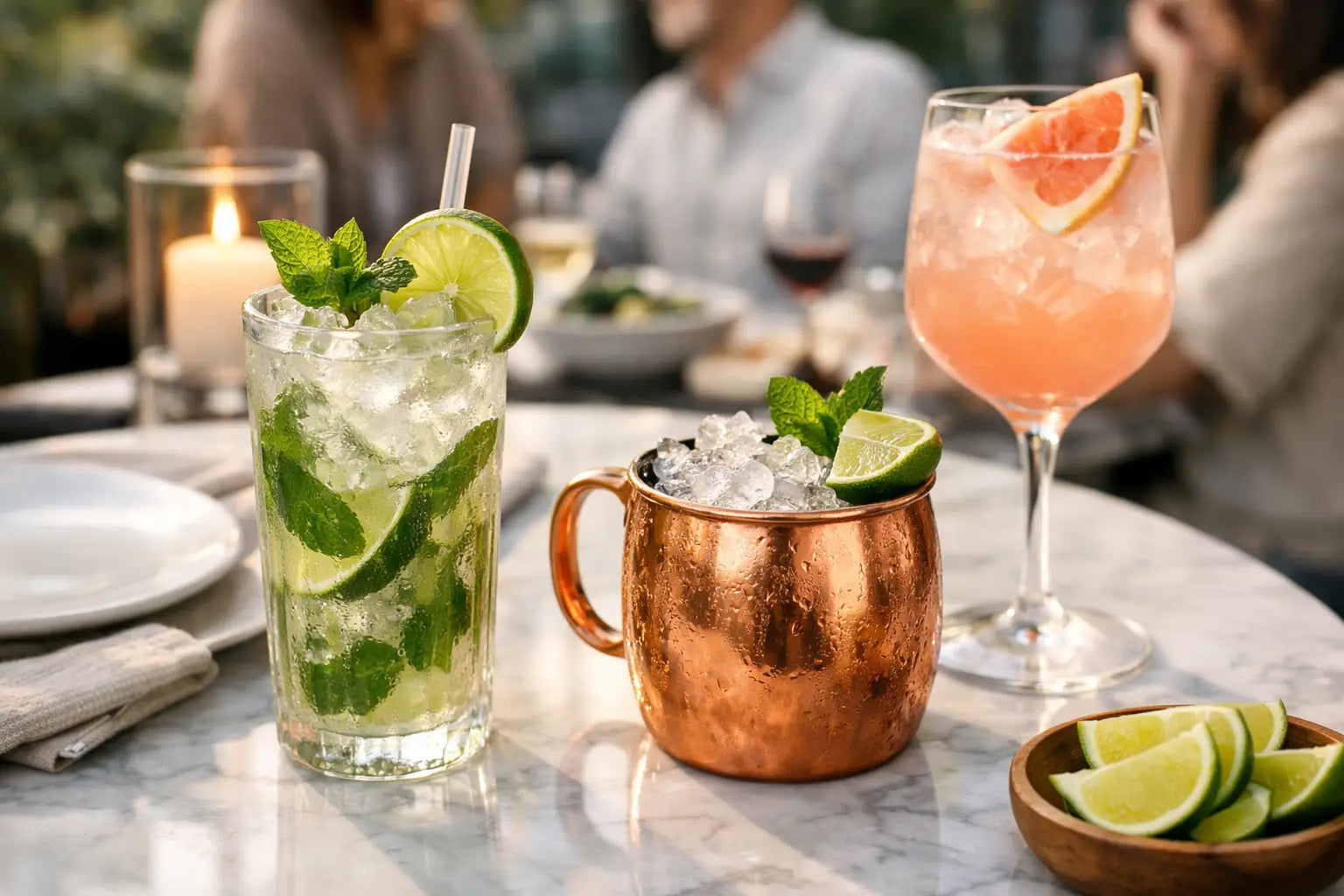
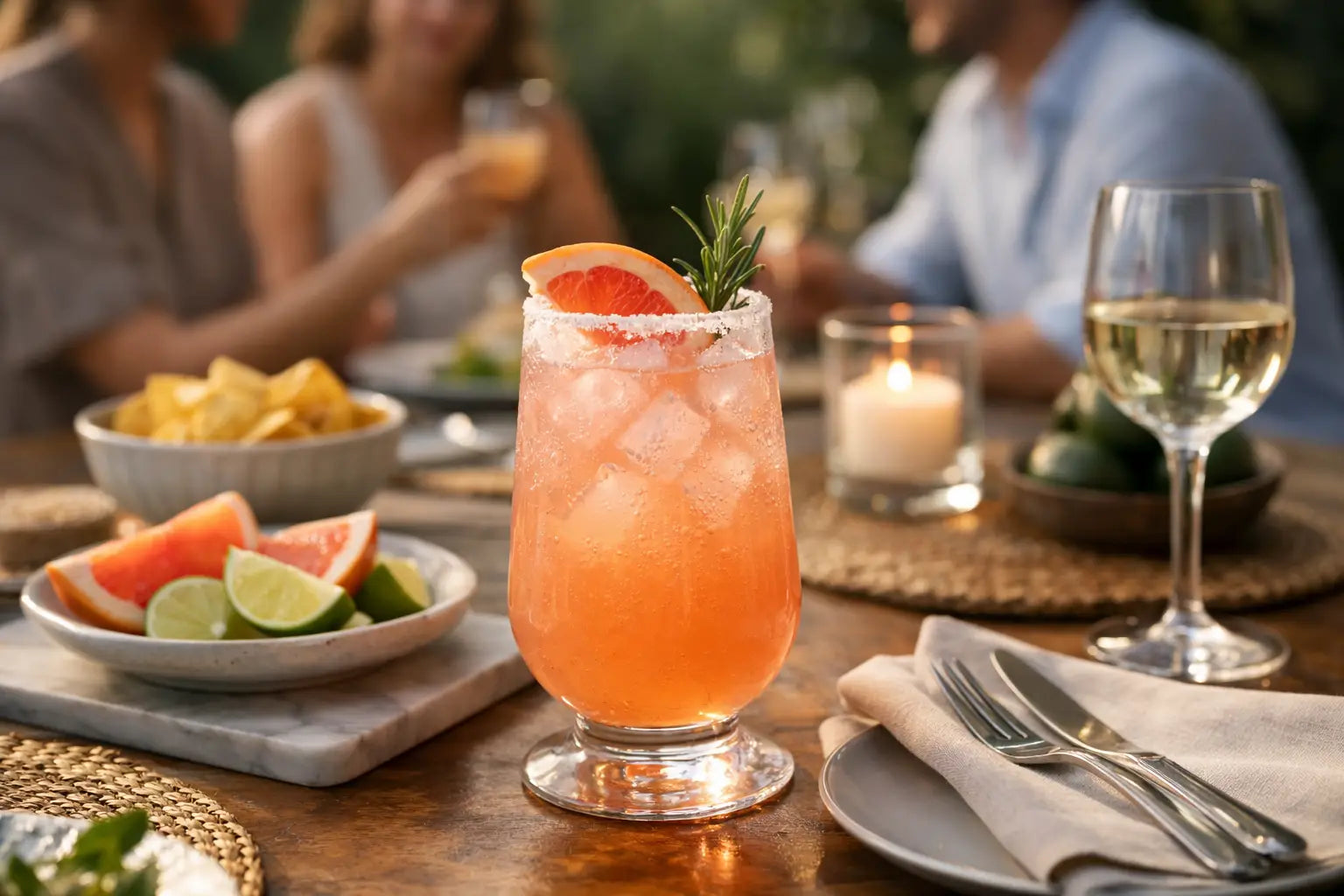
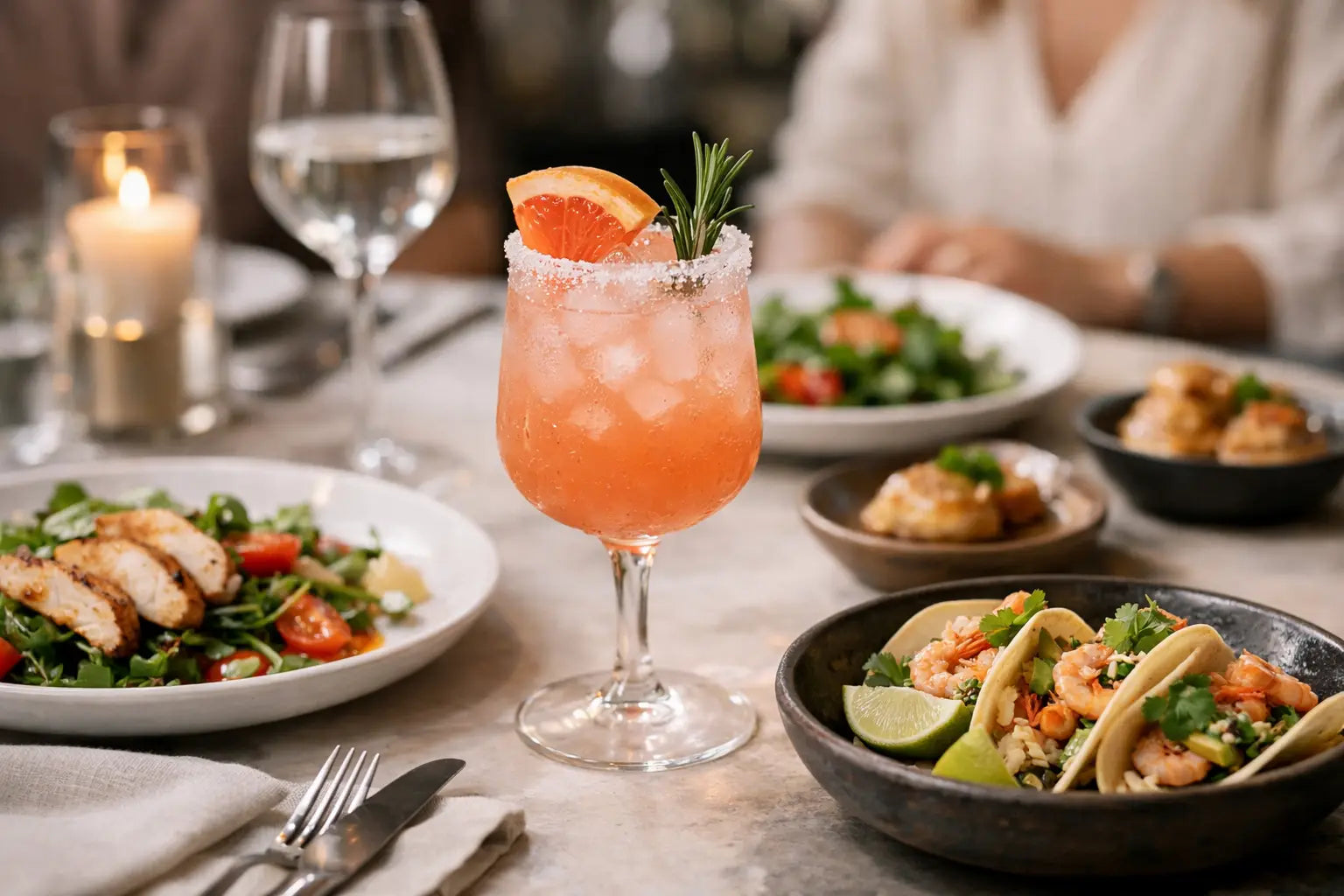
This is where alcohol-free cocktail-inspired serves shine. A well-made non-alcoholic Paloma profile, for example, can be exceptional with tacos, grilled shrimp, or anything with lime and chili because the grapefruit bitterness and citrus snap keep the plate energized. A Mojito-style serve, minty and zesty, feels right with herb-forward salads, falafel, tabbouleh, or grilled chicken because it echoes freshness without becoming sugary.
How to Pair Mocktails With Food by Occasion
At a dinner party, pairing should support the mood as much as the menu. You do not need a different drink for every course, but it helps to think in phases.
For aperitif moments and passed bites, choose something bright, sparkling, and appetite-sharpening. Citrus, light bitterness, and bubbles all work beautifully here. These profiles flatter olives, nuts, crostini, tempura vegetables, and seafood starters.
For the main course, move toward structure. If the dish is grilled, charred, spiced, or glazed, the mocktail should have enough intensity to stay present. Ginger, pink citrus, botanical notes, and a touch of bitterness all help.
For dessert, restraint matters. Pairing a sweet dessert with a sweet drink can become heavy very quickly. A better move is often a tart fruit-driven mocktail with enough freshness to lift the plate. Berry cheesecake, lemon tart, dark chocolate, and stone-fruit desserts all benefit from contrast.
If you are serving one mocktail throughout the meal, choose versatility over novelty. Balanced citrus, moderate sweetness, and clean finish will carry farther than something intensely creamy or candy-like.
Specific Pairing Ideas That Actually Work
A Bellini-style mocktail, with soft peach notes and gentle sparkle, suits brunch particularly well. It pairs naturally with smoked salmon, prosciutto, burrata, quiche, and pastries that are buttery rather than overly sweet. The fruit softens salt, while the bubbles keep everything feeling light.
A Mojito-style mocktail is one of the most food-friendly options available. Mint, lime, and a clean finish work with grilled vegetables, shrimp, ceviche, rice dishes, and fresh summer spreads. It is especially useful when the menu includes herbs, chili, or citrus because it keeps pace without crowding the plate.
A Paloma-style mocktail is a sharp choice for Mexican-inspired menus, roast chicken, grilled corn, and dishes with heat. Grapefruit bitterness gives it enough backbone for richer food, while the citrus keeps the pairing lively.
A Moscow Mule-style mocktail is ideal when you need spice and lift. Ginger has a natural affinity for Asian-inspired dishes, sticky wings, glazed salmon, pork bao, and anything with sesame or soy. It also cuts through fried food beautifully.
The trade-off is that ginger can dominate gentler dishes. If your food is subtle, a mule-style serve may feel too assertive. In those cases, reach for something lighter and more herbaceous instead.
Common Pairing Mistakes
The first mistake is assuming alcohol-free means sweeter. Many people still default to mocktails that taste like dessert, then wonder why the pairing feels clumsy. Food generally prefers balance. Dryness, bitterness, acid, and botanical detail matter just as much in a non-alcoholic serve as they do in a classic cocktail.
The second mistake is overlooking salt and fat. Rich cheeses, fried appetizers, creamy dips, roast chicken skin, and buttery pastry all need lift. Without acidity or bubbles, the drink can feel dull. This is one reason ready-to-drink premium serves with real structure tend to perform better at the table than improvised juice mixes.
The third mistake is matching intensity poorly. A delicate cucumber spritz disappears next to barbecue ribs. A fiery ginger drink can bulldoze a simple white fish. Good pairing is less about perfection and more about proportion.
Temperature is another detail people miss. Serve a mocktail too warm and it loses definition. Serve it ice-cold with no aroma and it may taste muted. Chilled, properly glassed, and garnished with intention if the occasion calls for it, the same drink can feel dramatically more polished.
Building a Better Non-Alcoholic Table
Thoughtful pairing is not only about taste. It changes the experience of the table. When the alcohol-free option is chosen with the same care as the menu, guests who are moderating, sober-curious, or simply not drinking are not being handed an afterthought. They are part of the occasion in full.
That is why style matters. A bartender-quality mocktail with balance and complexity belongs in proper stemware or a highball, served with the same confidence as any cocktail. The point is not imitation for its own sake. It is offering something complete and celebratory on its own terms.
For hosts, that also means convenience matters. Ready-to-serve options can make pairing easier because the flavor profile is consistent from can to can, course to course. Brands such as Savyll have helped raise the standard here by treating non-alcoholic cocktails as serious drinks designed for real social occasions, not backup choices.
If you are planning a meal, start with one question: what do you want the drink to do for the food? Brighten it, cool it, cut through it, echo it, or soften it. Once you think that way, pairing becomes less like a rulebook and more like good hosting - attentive, stylish, and built to bring people together.