
How to Serve Non Alcoholic Cocktails Well
A warm can passed across the kitchen counter is not a serving ritual. If you want people to reach for alcohol-free drinks with real enthusiasm, the experience has to feel considered from the first pour. That is the difference in how to serve non alcoholic cocktails well - not as an afterthought, but as part of the occasion.
The good news is that this has very little to do with complicated bartending. In most homes, and even at many events, serving non-alcoholic cocktails beautifully comes down to temperature, glassware, garnish, and timing. Get those right, and the drink feels social, polished, and fully worthy of the table.
How to serve non alcoholic cocktails without making them feel secondary
The quickest way to diminish an alcohol-free option is to make it look like the backup plan. Guests notice when wine is chilled properly, spirits are displayed neatly, and the non-alcoholic drink is left in generic cans beside the soda. Presentation signals value.
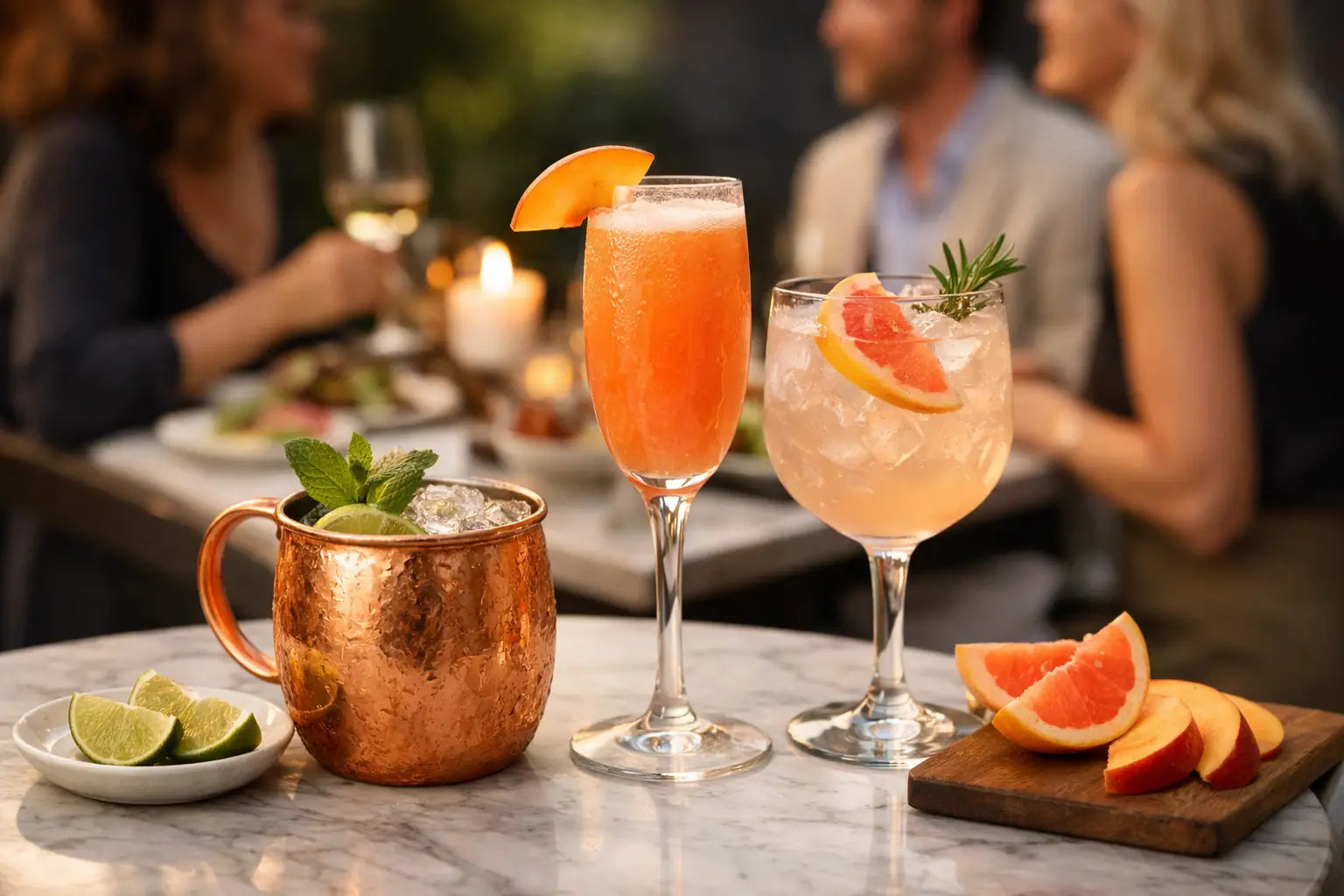
Serve non-alcoholic cocktails the way you would serve any premium drink. Use proper glasses rather than disposable cups when the setting allows. Chill everything in advance. Pour with intention. If a drink is inspired by a Bellini, Mojito, Paloma, or Moscow Mule, let the serve reflect that identity. A flute, highball, rocks glass, or mule mug gives the drink shape and context before anyone takes a sip.
This is not about copying alcohol culture for its own sake. It is about giving people the same sense of occasion. For many guests, that matters as much as flavor. A beautifully served drink helps everyone feel included without explanation.
Start with the right serving temperature
Temperature does more work than many hosts realize. A flat, lukewarm cocktail can taste overly sweet or dull, while the same drink served properly chilled feels sharper, cleaner, and more balanced.
Most non-alcoholic cocktails are best served cold, and some are dramatically better that way. Citrus-forward styles such as a Paloma or Mojito benefit from real chill because it keeps the profile bright and refreshing. A ginger-led serve like a Moscow Mule feels crisper and more structured when the liquid, the glass, and the ice are all cold.
If you are serving canned, ready-to-drink options, refrigerate them thoroughly rather than cooling them at the last minute with a handful of melting ice. Quick chilling can help in a pinch, but planning ahead preserves texture and flavor. If you want a more elevated serve, chill the glassware too, especially for sparkling or delicate drinks.
There is one trade-off worth noting. Very cold temperatures can mute subtler aromatics. If a drink has more floral or fruit-led notes, you may want it chilled but not icy to the point of muting character. It depends on the style, which is why tasting before guests arrive is always smart.
Choose glassware that matches the drink
Good glassware is not fussy. It is functional, and it changes perception immediately.
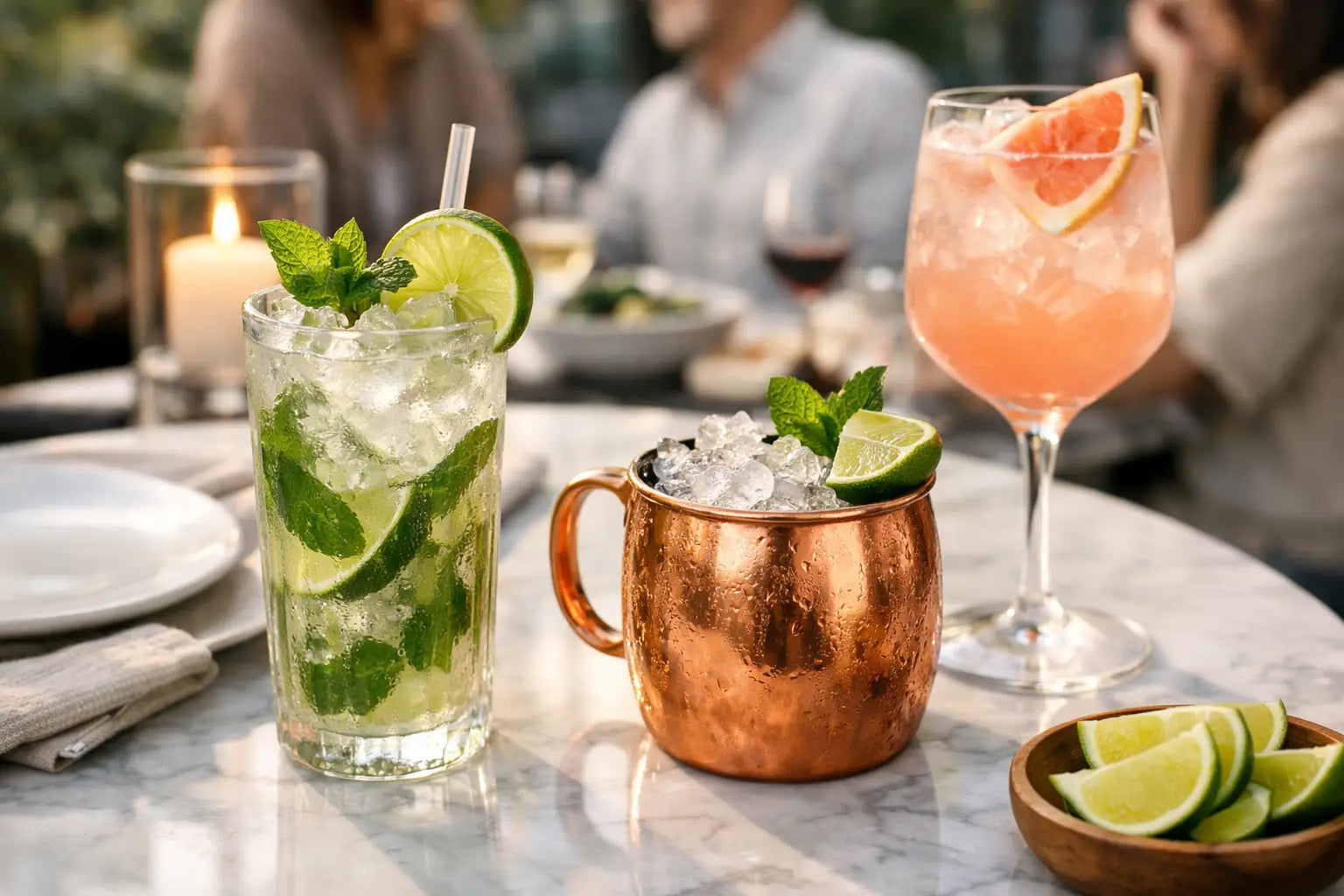
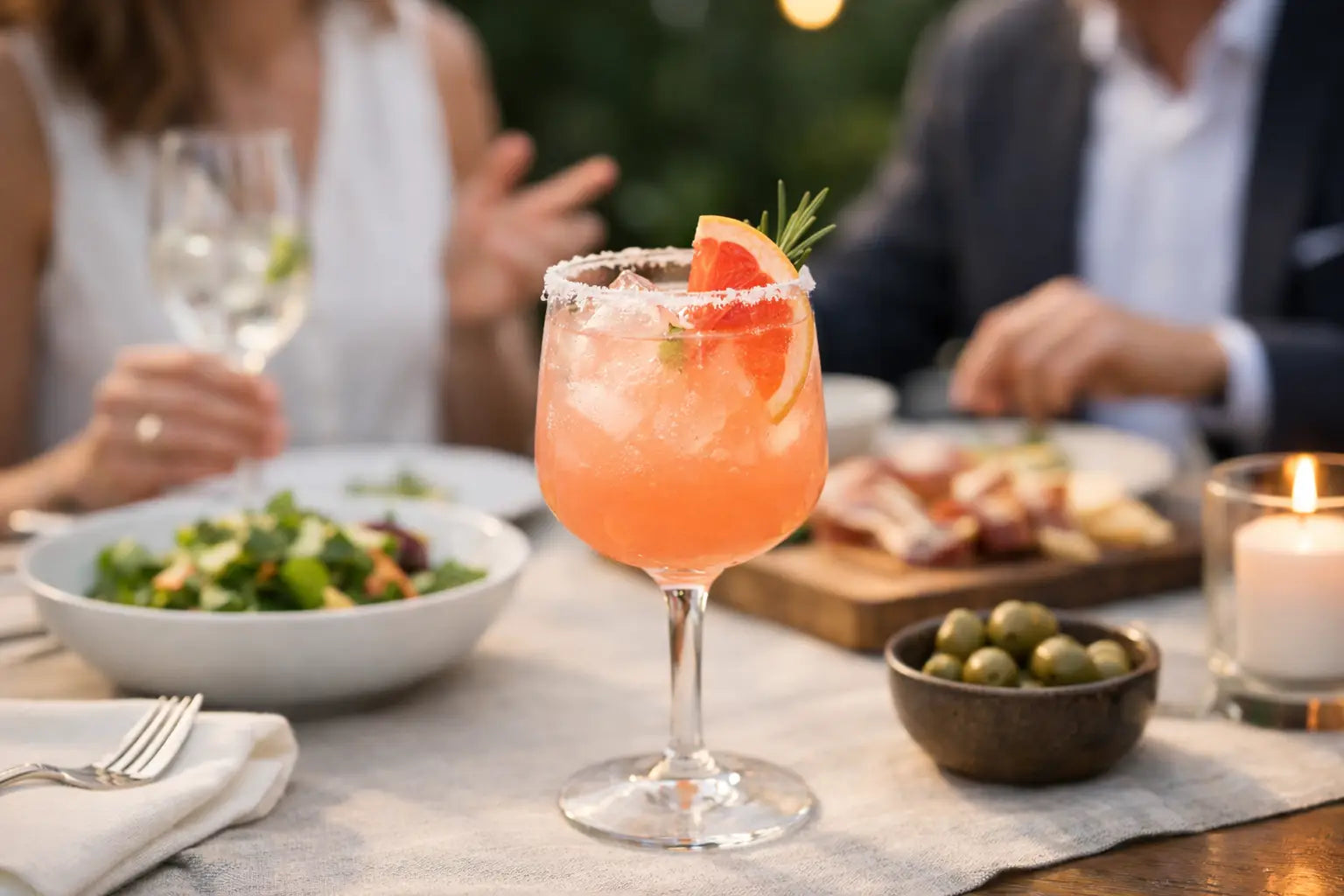
A Bellini-style serve belongs in a flute or stemmed glass because it emphasizes elegance and keeps the drink feeling celebratory. Mojito-style drinks suit a highball, where mint, lime, and bubbles have room to express themselves. A Paloma works beautifully in a tall glass or over ice in a rocks glass with a salt accent. A mule-style drink has enough presence for a mule mug, but a sturdy tumbler works just as well if that is what you have.
If you are hosting a mixed crowd, consistency matters more than perfection. It is better to serve every guest in clean, attractive matching glasses than to obsess over technical correctness. The goal is a cohesive look that says this was planned.
For larger parties, simple is often better. One style of highball and one style of stemware can cover most needs while still looking polished. That keeps service smooth and avoids the cluttered feeling of a bar improvised from random cabinets.
Garnish with purpose, not decoration
A garnish should add aroma, visual appeal, or a hint of flavor. It should not feel like a craft project.
Fresh mint for a Mojito-style drink is useful because the aroma lifts as the glass comes up. A grapefruit wedge or peel works for a Paloma because it reinforces the citrus profile. A thin lime wheel can sharpen the look of a Mule or Mojito without overwhelming the drink. For a Bellini-inspired pour, a peach slice can work if it is elegant and restrained.
The common mistake is overdoing it. Too much garnish can make a drink harder to handle and less sophisticated. One thoughtful element is usually enough. Freshness matters more than quantity. Wilted mint or dry citrus quietly undermines the whole serve.
If you are preparing drinks for a dinner party, set garnishes out in small bowls and add them as you pour rather than hours in advance. That small step keeps everything looking crisp.
Ice matters more than people think
Ice is part of the drink, not just a cooling tool. Poor ice melts fast, dilutes flavor, and leaves the serve looking tired within minutes.
Use fresh, solid ice whenever possible. Larger cubes or clean machine ice generally hold up better than small chipped pieces from the bottom of a freezer bag. This is especially important for drinks with bright, layered flavor, where too much water quickly flattens the profile.
That said, not every non-alcoholic cocktail needs the same amount of ice. A sparkling Bellini-style drink may need little or none if served straight from a chilled can into a chilled flute. A Mojito or Paloma often benefits from plenty of ice because the format is longer and more refreshing. A Mule typically wants enough ice to keep the ginger lively and the finish crisp.
The practical rule is simple: match the ice to the drink style, and never use ice to compensate for a poorly chilled drink.
Think about the moment of service
Part of learning how to serve non alcoholic cocktails is understanding when to serve them. Timing shapes whether the drink feels integrated into the event or awkwardly separate.
Offer non-alcoholic cocktails at the same moment you offer everything else. Do not wait until someone asks. A host who says, “I’ve got a chilled Paloma-style serve, a minty Mojito-style option, and sparkling water,” makes alcohol-free choices feel normal and desirable.
This matters especially at dinners and celebrations, where people often make a choice in the first few minutes. If the non-alcoholic option appears later, after wine has already been poured, it can feel like an accommodation instead of part of the plan.
For larger gatherings, a dedicated serving station helps. Keep canned cocktails chilled in an ice bucket or cooler, place clean glassware nearby, and set out a small, tidy garnish tray. Guests can help themselves, but the setup still feels intentional. That balance of convenience and style is exactly what modern hosting needs.
Pair the serve with the occasion
Not every non-alcoholic cocktail belongs at every moment. The best hosts match the drink to the energy of the event.
A Bellini-style serve is ideal for brunches, showers, and early evening celebrations where you want something light, social, and polished. Mojito and Paloma styles work well for warm-weather lunches, backyard dinners, and casual gatherings where freshness matters. A Moscow Mule-style serve brings a little more edge - fiery, punchy, crisp, and especially good when the menu has spice or smoke.
This is where ready-to-drink options have a real advantage. They remove the friction of batching, measuring, and cleaning up, which means you can focus on serving well rather than playing bartender all night. For hosts who care about flavor and presentation but also want the evening to feel relaxed, that convenience is not a compromise. It is part of the appeal.
One premium brand that understands this balance is Savyll, with ready-to-serve non-alcoholic cocktails designed to keep the experience stylish and straightforward.
Small details that make a big difference
The best alcohol-free service is often about restraint. Use napkins that match the occasion. Keep cans out of sight if you want a more elevated table. Refresh ice before it gets cloudy. Wipe drips from glasses before serving. None of this is difficult, but together it changes the impression completely.
Language matters too. Avoid framing the drink apologetically. You are not offering “just a non-alcoholic option.” You are offering a properly made cocktail without alcohol. That shift sounds small, but it sets the tone for the whole room.
If you are hosting guests with different preferences, variety helps. Offer one citrus-led option, one sparkling option, and one with more depth or spice. You do not need a huge menu. You need a short selection that feels curated.
Serving non-alcoholic cocktails well is ultimately about respect - for the drink, for the guest, and for the occasion. When the glass is cold, the garnish is fresh, and the pour feels intentional, nobody is settling. They are simply enjoying a great cocktail in excellent company.