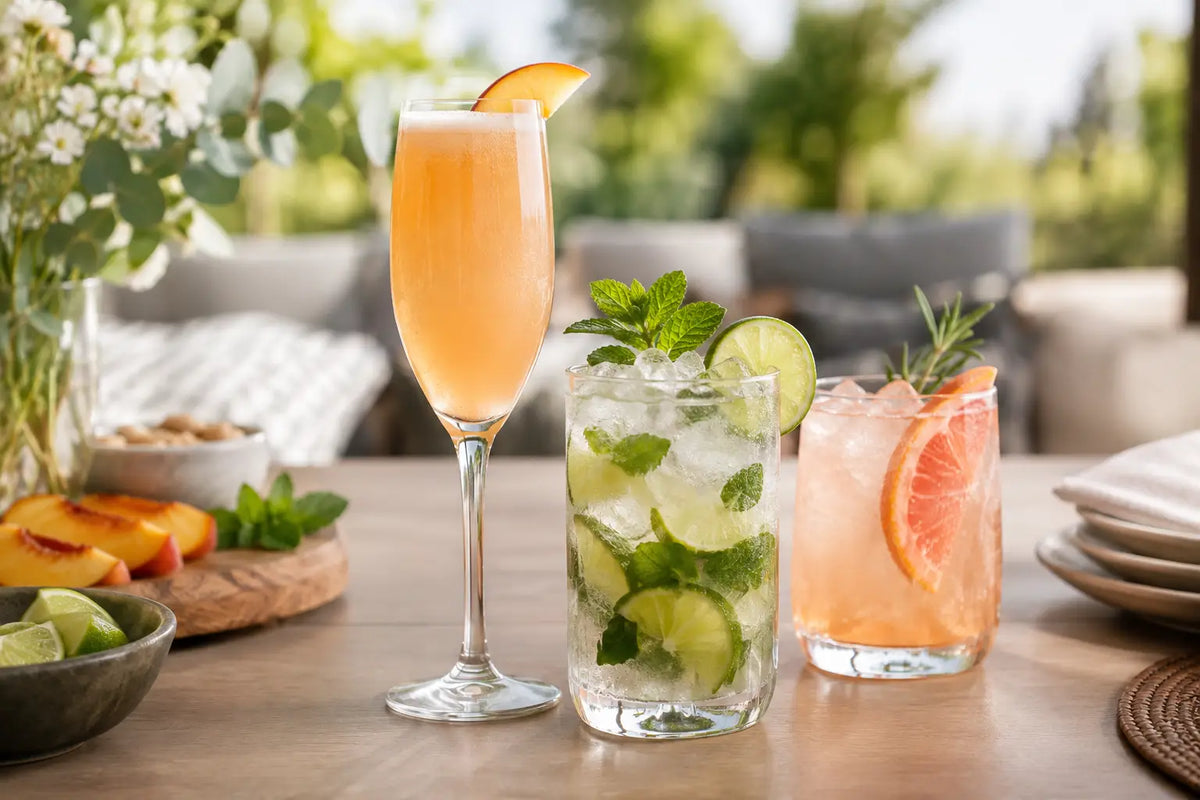


Mocktail Flavor Trends Worth Serving Now
The best mocktail flavor trends are not trying to disguise what is missing. They are building something worth choosing: a cold Paloma with a bitter grapefruit edge, a Mojito that tastes freshly muddled, or a ginger-forward Mule with enough heat to hold its own beside dinner. For hosts, drinkers, and hospitality teams alike, the standard has changed. A non-alcoholic drink should feel considered from the first sip to the last.
That shift is changing what appears in refrigerators, on restaurant menus, and at the center of the table. Sweet soda-style alternatives still have a place, especially for casual daytime occasions, but sophisticated alcohol-free cocktails are moving toward balance, texture, and recognizable cocktail structure. The most compelling flavors are bright without being sharp, complex without becoming fussy, and ready to serve when people arrive.
Mocktail Flavor Trends Are Becoming More Cocktail-Led
For years, non-alcoholic drinks were often built around a single loud note: fruit juice, syrup, or bubbles. Today’s drinker expects more. They know what a classic cocktail should taste like, and they want the citrus, bitterness, spice, herbaceousness, and length that make a drink feel complete.
That does not mean every mocktail needs to imitate a particular alcoholic spirit. It means it needs a point of view. A well-made alcohol-free Paloma can deliver juicy grapefruit, lime, and a lightly bitter finish without relying on tequila as a reference point. A Bellini can be ripe and celebratory without becoming sugary. The goal is not mimicry at any cost. It is a balanced, bartender-quality experience with its own confidence.
This matters at social occasions. When one guest is offered a complex drink in an elegant glass while another gets a flat soda or overly sweet juice blend, the difference is obvious. A proper mocktail belongs in the same moment as the wine, beer, or cocktail list. It gives everyone a way to participate fully, whether they are moderating, driving, pregnant, training, sober-curious, or simply not in the mood for alcohol.
Bright citrus with a bitter edge
Citrus is still central to the category, but the direction is more grown-up than a straightforward lemonade profile. Grapefruit, yuzu, blood orange, lemon peel, and lime are being used for freshness and aroma, while bitter notes keep the finish dry and food-friendly.
Grapefruit is especially persuasive because it brings sweetness, tartness, and a welcome touch of bitterness in one flavor. It gives a Paloma-style drink definition, particularly when paired with lime and carbonation. Blood orange can offer a softer, deeper citrus character, while yuzu brings a fragrant sharpness that works beautifully in a lighter aperitif-style serve.
The trade-off is restraint. Too much acidity can make a canned drink taste thin or aggressive, particularly without alcohol to round it out. The strongest options use citrus as one layer in a wider flavor composition, supported by mineral notes, botanicals, spice, or a measured sweetness.
Ginger and spice that do more than burn
Ginger remains one of the most dependable flavors in alcohol-free cocktails because it creates immediate character. It is fiery, punchy, crisp, and naturally suited to sparkling drinks. In a Moscow Mule-style serve, ginger gives the drink a warming backbone that makes it feel substantial rather than merely refreshing.
The newer approach is more nuanced than maximum heat. Fresh ginger, black pepper, chili, cardamom, and warming spices can add depth in different ways. A touch of chili may sharpen tropical fruit. Pepper can make lemon or cucumber feel more aromatic. Cardamom brings a fragrant, almost citrusy warmth that suits evening occasions.
Spice needs careful handling. A drink that is too hot can crowd out food and limit its appeal across a mixed group. A controlled spice note, on the other hand, creates a finish people notice and return to. It is one reason a sophisticated mocktail can feel satisfying even when served over plenty of ice.
Garden herbs and cooler green notes
Mint will always have a natural home in a Mojito, but green flavors are moving beyond a single herb garnish. Basil, rosemary, cucumber, celery, and thyme are showing up in drinks that want to feel clean, aromatic, and composed.
These flavors work best when they are recognizable but not vegetal. Cucumber can lend a cool, watery lift to lime and citrus. Rosemary brings a pine-like savoriness that suits grapefruit or blood orange. Basil makes berry and lemon combinations feel less confectionary. Mint remains a favorite because it is immediately refreshing and familiar, but it needs enough acidity and sweetness around it to avoid reading like mouthwash.
Herbal mocktails are especially useful at dinner parties and in hospitality settings because they sit comfortably beside food. A minty, zesty drink can refresh the palate with grilled vegetables, spicy dishes, seafood, and rich sauces. A savory herb note also signals that the drink was made for adults, not simply adapted for them.
The Rise of Savory, Dry, and Textural Serves
One of the most interesting mocktail flavor trends is the move away from sweetness as the default. Many people are looking for drinks they can enjoy slowly over the course of an evening. That calls for a drier profile, a little bitterness, and enough texture to make each sip interesting.
Tea, verjus, saline, apple cider vinegar, and botanical extracts can all contribute complexity when used with a light hand. Tea can add tannin and body. Verjus offers a softer acidity than lemon juice. A tiny saline note can make citrus and fruit taste fuller, much as it does in cooking. These are not gimmicks when they serve the drink. They are tools for giving alcohol-free cocktails the structure that alcohol once supplied.
Texture matters, too. Fine carbonation can lift citrus and herbaceous flavors, while a creamier element can make tropical or stone-fruit profiles feel more indulgent. The occasion should guide the choice. A sparkling drink is ideal for a warm afternoon, a brunch table, or a pre-dinner aperitif. A fuller, less fizzy serve may be better suited to a long meal or a late-night gathering.
For ready-to-drink formats, this balance is particularly valuable. The drink has to arrive in the glass with the right flavor already in place. Convenience is not an excuse for a flat finish or an overly sweet profile. It is an opportunity to offer a reliably polished serve without measuring, muddling, or stocking a bar cart with half-used ingredients.
Familiar classics still set the standard
Trend-led flavors can be exciting, but familiar cocktail cues remain powerful. People know what they want from a Bellini, Mojito, Paloma, or Moscow Mule. Those names offer an instant occasion and flavor expectation: ripe peach and bubbles, mint and lime, tart grapefruit, or lively ginger.
That familiarity makes classic-inspired mocktails an easy choice when serving a group with different preferences. They feel celebratory without needing an explanation. A mixed pack can be particularly useful for hosts because it gives guests a genuine choice rather than treating alcohol-free drinking as one flavor for everyone.
The key is authenticity. If a drink is called Mojito-inspired, it should have the cooling mint, bright lime, and sparkling lift people anticipate. If it is a Mule, the ginger should be present enough to provide a crisp, warming finish. Classic profiles earn their place because they have already solved the question of balance.
What to Serve for Different Occasions
The right flavor is often less about a universal favorite and more about the setting. For brunch, fruit-forward sparkling options such as a Bellini-style drink feel easy, festive, and light. For a backyard lunch, a citrusy Paloma or mint-led Mojito brings the kind of refreshment that calls for ice and sunshine.
At dinner, choose drinks with more dryness or spice. Ginger, grapefruit, herbs, and restrained bitterness stand up well to food and feel appropriate after the first course. For an evening celebration, serve a few distinct profiles in proper glassware with a simple garnish: a lime wheel, a mint sprig, a grapefruit twist, or a slice of fresh ginger. The ritual takes seconds, but it tells guests that their drink was not an afterthought.
For bars, cafes, and retailers, variety should be purposeful rather than sprawling. A concise range of recognizable, well-executed flavors is often more compelling than a long list of novelty combinations. It makes ordering easier, supports dependable service, and gives customers confidence that every option has a clear taste profile.
Savyll’s classic cocktail-inspired range reflects this approach: polished, ready-to-serve drinks with all-natural, vegan-friendly ingredients and flavors designed for real occasions. The point is not to make alcohol-free drinking feel like a compromise. It is to make the choice feel effortless.
The most enduring trend is simple: serve drinks that invite people in. Keep a few chilled options ready, choose flavors with genuine balance, and pour every guest something that looks as good as the moment feels.