

Mocktails vs Alcohol for Modern Occasions
The first drink poured at a dinner party quietly sets the tone. It can say, “we’re celebrating,” without asking anyone to compromise their plans for the evening, their early start tomorrow, or simply their preference not to drink. That is what makes mocktails vs alcohol a more interesting conversation than a simple choice between fun and restraint. Both can belong at the table. The question is what helps the occasion feel its best.
For many adults, alcohol is no longer the automatic centerpiece of a great night. A well-made non-alcoholic cocktail offers the ritual, flavor, and visual appeal people expect from a proper serve, while giving them more control over how the evening unfolds. It is not a consolation prize. It is another considered option.
Mocktails vs Alcohol: The Real Difference
The clearest distinction is obvious: alcohol contains ethanol, while a true mocktail does not. But in practice, the difference reaches further than what is on the can or in the glass. Alcohol can change pace, mood, judgment, sleep, and how you feel the following morning. A thoughtfully made mocktail changes none of those things, while still offering the sensory details that make a drink feel special: acidity, bitterness, spice, fresh herbs, bubbles, and a balanced finish.
That does not mean every mocktail is automatically superior, or that every alcoholic drink is a poor choice. A sugary non-alcoholic drink may not suit someone looking for a lighter option, just as a single glass of wine may be exactly what another guest wants with dinner. The better comparison is not mocktail versus alcohol as a moral test. It is about choosing the drink that matches your taste, your plans, and the people around you.
A proper cocktail-inspired mocktail should also be judged on more than its alcohol-free status. If it is overly sweet, flat, or served like an afterthought, it misses the point. The best versions carry enough structure to stand up to food and conversation, whether that means a bright citrus edge, cooling mint, ginger heat, or the gentle bitterness that gives a Paloma its grown-up character.
Why More Occasions Call for a Choice
There was a time when declining alcohol could make someone feel like they were stepping outside the celebration. They might be handed sparkling water, a soft drink, or a juice and expected to make do. That social script is changing, especially among hosts and guests who understand that good hospitality means offering real choice.
A premium mocktail keeps the ritual intact. There is still something to open, pour over ice, garnish, and raise in a toast. At a backyard lunch, a work event, a wedding reception, or a dinner where the conversation matters more than the last call, that sense of participation has real value.
Alcohol can still fit beautifully into many of these moments. The point is that it should be available by preference, not by default. When a host offers both, nobody needs to explain themselves. The person training for a race, taking a break from drinking, driving home, managing an early morning, or simply not in the mood gets the same level of consideration as everyone else.
The Pace of the Evening Matters
One of the most practical advantages of a mocktail is control. You can enjoy more than one over a long evening without the same cumulative effects associated with alcohol. That can make a difference at a client dinner, a family gathering, or a celebration that begins in the afternoon and runs late.
It can also make the next morning feel less negotiable. Alcohol affects people differently depending on quantity, food, hydration, sleep, medication, and individual health factors. A non-alcoholic cocktail removes alcohol from that equation. It does not promise perfection, but it offers a clearer, more predictable finish to the night.
Flavor Is No Longer the Trade-Off
The old objection to non-alcoholic drinks was understandable: too many tasted like syrup, soda, or fruit punch with a fancy name. That standard is no longer acceptable. Adults who care about a Negroni’s bitterness or a Moscow Mule’s ginger bite are not looking for a novelty. They want complexity.
Classic cocktail profiles work particularly well without alcohol when the balance is handled properly. A Bellini can be soft, sparkling, and fruit-forward without becoming cloying. A Mojito should be minty and zesty, with enough brightness to stay refreshing. A Moscow Mule needs a fiery ginger note and a crisp finish. These are flavor experiences, not merely imitations.
Ready-to-drink options make that experience easier to deliver consistently. Rather than buying several ingredients, measuring them, and hoping the balance lands, hosts can chill a premium canned cocktail, pour it into glassware, add ice and a simple garnish, and spend more time with their guests. Savyll is built around that idea: bartender-quality cocktail character in an alcohol-free format designed for real occasions.
What to Consider Beyond Alcohol Content
Choosing between mocktails and alcohol is personal, but a few details make the decision more useful than a glance at the menu.
First, look at the occasion. A celebratory dinner may call for both a great bottle of wine and a sophisticated zero-proof option. A weekday lunch, networking event, or long afternoon outdoors may favor drinks that keep everyone comfortable and clear-headed. There is no single rule, only better alignment.
Second, consider the ingredients. Non-alcoholic does not automatically mean low-calorie, low-sugar, or suitable for every dietary need. Read the label if those factors matter to you. Look for drinks with recognizable ingredients and a flavor profile that does not rely solely on sweetness. Vegan-friendly formulations can also make hosting simpler when guests have different preferences.
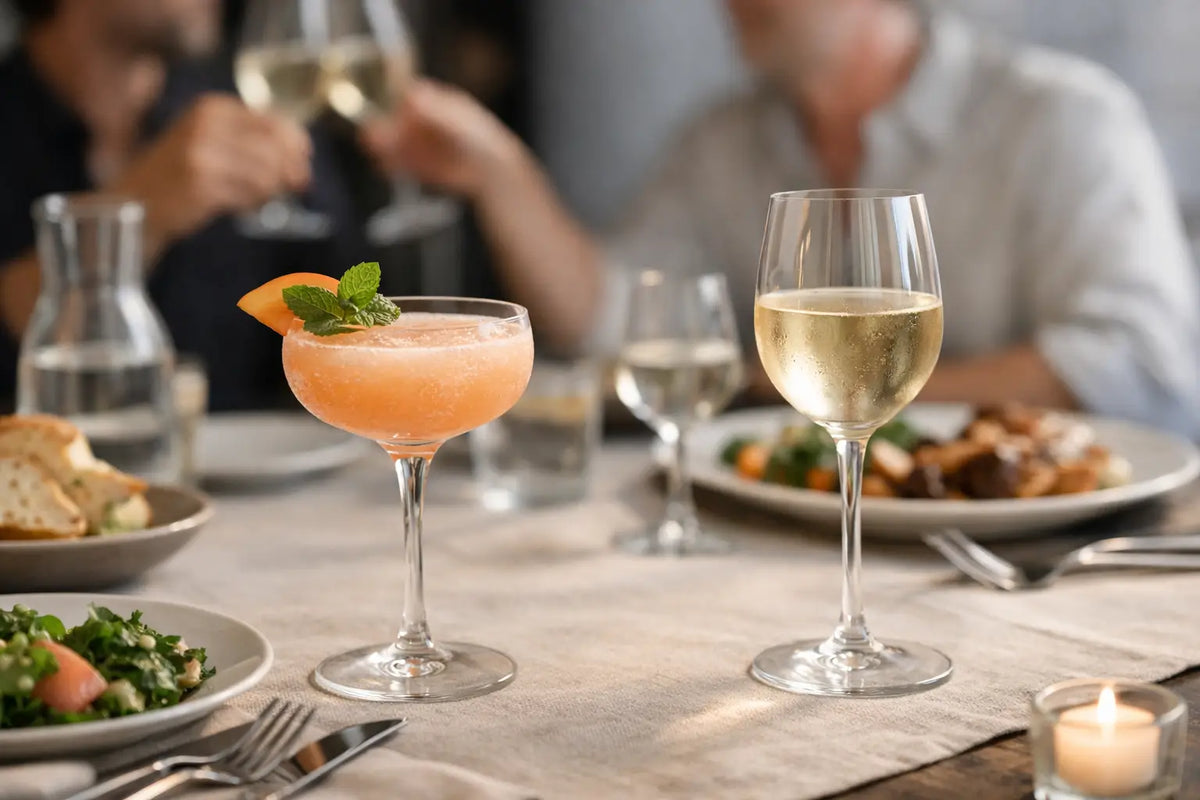
Third, think about presentation. A drink served in a beautiful glass with ice, citrus, mint, or a salted rim feels deliberate. That matters because people drink with their eyes before the first sip. The same mocktail can feel dramatically more celebratory when it is treated as a cocktail, not an alternative tucked beside the soda.
Hosting Without Separating the Room
The most elegant way to serve mocktails and alcohol is to avoid making either group feel singled out. Put both options in the same setting. Use the same glassware. Offer the same garnishes. Name the drinks clearly and confidently.
A simple bar setup works well: chilled alcoholic and non-alcoholic cocktails, plenty of ice, citrus wedges, fresh herbs, and sparkling water. Guests can choose without needing to ask for a separate drink or share personal reasons. This is thoughtful hosting at its best - generous, relaxed, and free of assumptions.
Food pairing deserves the same attention. Bright, citrus-led mocktails cut through rich dishes and grilled foods. Ginger-forward serves work well with spicy flavors and savory snacks. A peachy sparkling drink can bring softness to brunch, cheese boards, and lighter desserts. The absence of alcohol does not make a drink less useful at the table. It simply makes it more flexible for more people.
When Alcohol May Still Be the Right Choice
There is room for honesty in this conversation. Some people enjoy alcohol for its flavor, tradition, or role in a particular meal, and moderate drinking may be part of how they celebrate. A mocktail does not need to replace every alcoholic drink to be worthwhile.
The strongest case for non-alcoholic cocktails is not that alcohol should disappear from every occasion. It is that nobody should have to choose between feeling included and avoiding alcohol. A thoughtful drinks menu makes space for both.
For anyone who is pregnant, taking certain medications, managing a health condition, recovering from alcohol use disorder, or concerned about their relationship with drinking, individual guidance from a qualified healthcare professional may be appropriate. In those situations, the details matter more than broad lifestyle advice.
Make the Better Choice Feel Effortless
The best drink is the one that lets you enjoy the moment on your own terms. Sometimes that will be a glass of wine with dinner. Sometimes it will be a crisp, minty mocktail before a morning flight. Often, it will be both options on the table, with no explanation required.
Serve something with character, offer it with confidence, and let every guest join the toast exactly as they are.