
What Makes a Great Non Alcoholic Paloma Cocktail
Some drinks only work in the right setting. A Paloma is not one of them. It belongs just as easily at a sunny brunch as it does at a dinner party, an early-evening get-together, or a quiet reset after work. That easy versatility is exactly why the non alcoholic paloma cocktail matters - when it is done well, it feels every bit as social, polished, and satisfying as the original.
The challenge is that "done well" is carrying a lot of weight here. Too many alcohol-free citrus drinks lean sugary, one-note, or oddly flat. They deliver grapefruit, perhaps, but not the structure that makes a Paloma feel like a cocktail instead of a soda. A proper alcohol-free version should still have tension: brightness, bitterness, salinity, and a clean finish that keeps you coming back for another sip.
What a non alcoholic paloma cocktail should taste like
At its best, a Paloma is crisp and slightly bitter, with fresh grapefruit leading the way and lime sharpening the edges. There is usually a touch of sweetness, but never enough to blur the drink’s shape. You want lift, not stickiness. You want refreshment, but with a little attitude.
That balance matters even more when you remove alcohol. Spirits naturally bring weight, heat, and length to a cocktail. Without them, the flavor has to work harder. In a great non alcoholic paloma cocktail, the citrus should feel layered rather than loud, and the finish should stay dry enough to read as adult.
This is where many alcohol-free serves miss the mark. Some chase sweetness to make the drink instantly likable. Others overcorrect with aggressive tartness that feels more like juice than a mixed drink. The right version sits in the middle. It is bright and zesty, but grounded. Easy to enjoy, yet still composed.
Why the Paloma works so well without alcohol
Not every classic cocktail translates elegantly into an alcohol-free format. Some rely heavily on the warmth and depth of the base spirit, and without that backbone they can feel incomplete. The Paloma has an advantage because its identity is already tied to citrus, sparkle, and refreshment.
That does not mean it is simple. A Paloma is deceptively precise. Grapefruit brings bitterness and aroma. Lime adds snap. Soda contributes texture and lift. Salt, when used well, sharpens everything and makes the drink feel more vivid. Because the structure is so clean, every element is exposed. If one part is off, the whole drink feels underdressed.
But when it is right, the alcohol-free format feels entirely natural. The drink still has energy. It still feels special in a proper glass with plenty of ice. It still belongs at the table, at the party, and in your hand when everyone else is ordering something mixed and celebratory.
That is part of its appeal. A non alcoholic Paloma does not ask to be excused from the occasion. It fits the occasion.
The flavor markers that separate average from exceptional
A convincing Paloma starts with grapefruit that tastes real. Not candy-like. Not syrupy. Not vaguely tropical. You want the kind of grapefruit character that brings both juice and peel, with a little natural bitterness intact. That bitterness is what keeps the drink grown-up.
Lime should be present, but supportive. If grapefruit is the lead, lime is the line that keeps everything in focus. Too little and the drink can feel soft. Too much and it starts tasting sharp in a way that overwhelms the rest.
Sweetness should round, not dominate. This is one of the biggest differences between a premium serve and a forgettable one. A sweet profile may seem crowd-pleasing at first, but it quickly tires the palate. A better Paloma leaves room for another sip. It feels brisk, not heavy.
Carbonation matters too. Fine bubbles keep the drink lively and help carry aroma. Flatness is especially unforgiving in alcohol-free cocktails because there is no spirit to create texture in the background. The sparkle has a real job to do.
Then there is salt. Not every version uses it in the same way, and that is where personal preference comes in. A salted rim can make the citrus feel brighter and more savory. A pinch in the liquid creates integration without making the drink look theatrical. Neither approach is mandatory, but some kind of mineral edge often helps the drink feel complete.
Ready-to-drink vs. homemade: it depends on the moment
There is a certain pleasure in mixing your own drink. Fresh citrus, chilled glassware, a neatly cut wedge of grapefruit - it all feels deliberate. If you enjoy building a serve and have the ingredients on hand, a homemade Paloma can be excellent.
But convenience is not the enemy of quality. For hosts, busy professionals, and anyone trying to offer something elegant without turning the kitchen into a bar station, a ready-to-drink option often makes more sense. The best ones remove the guesswork while keeping the profile balanced and cocktail-like.
The trade-off is simple. Homemade gives you control. Ready-to-drink gives you consistency, speed, and ease. If you are serving a group, consistency matters more than people admit. A drink that tastes just as good in the first pour as it does in the sixth is not a small thing.
That is why premium canned cocktails have found such a natural place in modern entertaining. They allow alcohol-free drinking to feel effortless rather than improvised. And when the recipe is strong, there is no sense of compromise. Savyll, for example, approaches the category with the understanding that alcohol-free should still feel occasion-worthy, not like a backup plan.
How to serve a non alcoholic paloma cocktail well
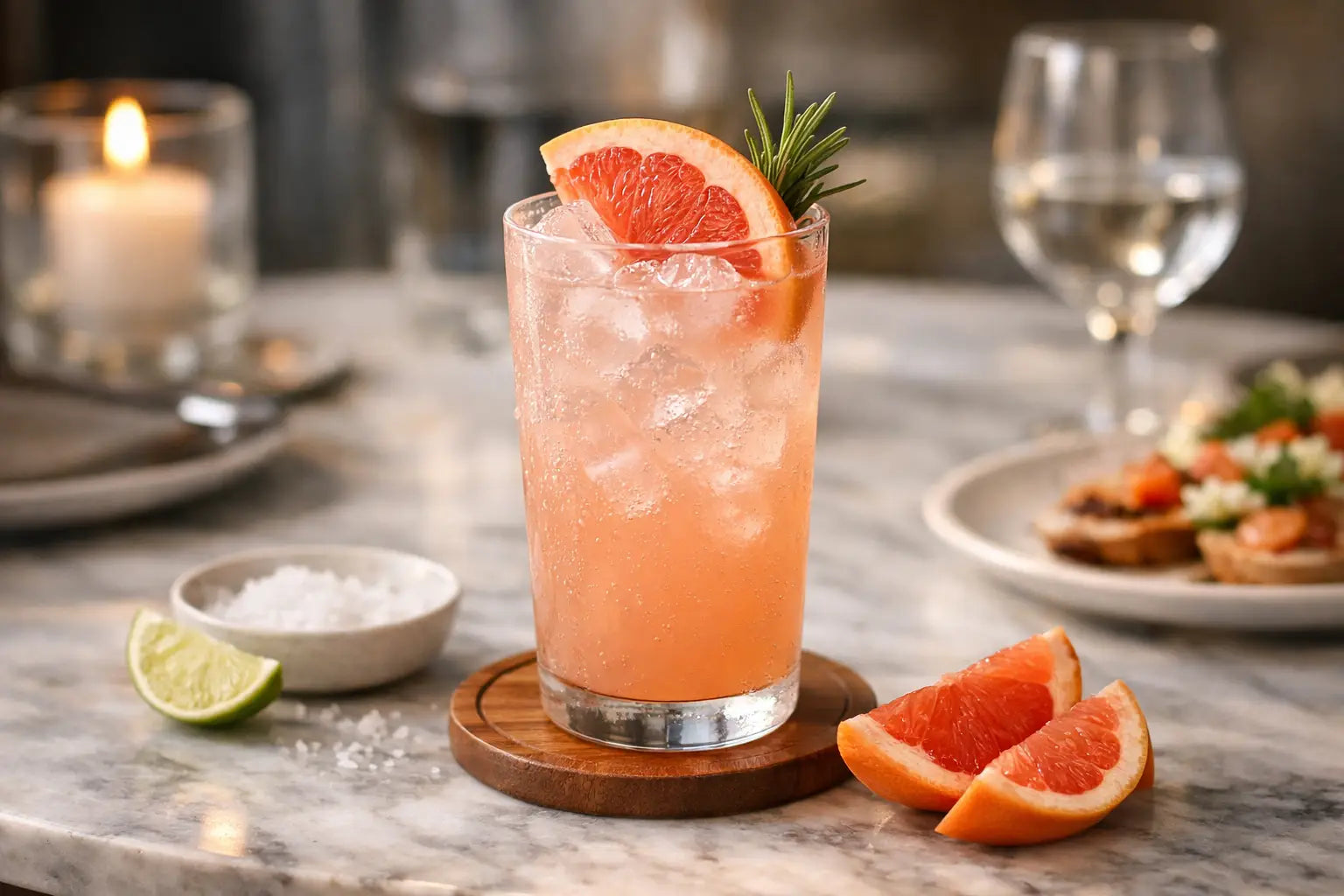
Presentation does some real work here. A Paloma is casual enough to feel relaxed, but it also rewards a little attention. Pour it over plenty of fresh ice in a highball or rocks glass. If you like a salted rim, keep it neat and restrained. A half-rim is often the smarter move because it gives the drinker control.
Garnish should support the profile, not clutter it. A grapefruit wedge works. So does a lime wheel. If the drink already has strong aromatics, there is no need to pile on herbs or extra fruit for effect.
Temperature matters more than people think. A non alcoholic cocktail that is not properly chilled can taste sweeter and less defined. Cold keeps the citrus taut and the finish cleaner. If you are serving cans or bottles, chill them thoroughly before opening rather than relying on a couple of cubes to do all the work.
This is also a drink that pairs well with food. Its bitterness and sparkle cut through rich bites beautifully, while the citrus keeps things lively. Think tacos, grilled shrimp, salty snacks, fresh guacamole, or a dinner spread that needs a bright counterpoint. It is festive without being overbearing.
Why this drink fits the way people socialize now
There has been a real shift in what people expect from alcohol-free options. No one wants to be handed something sugary and anonymous while everyone else gets a proper cocktail. People want a drink with identity, style, and flavor integrity.
The Paloma is particularly strong in that role because it carries familiarity. Even guests who do not usually choose alcohol-free know what kind of experience they are stepping into. The format is recognizable. The flavor profile is appealing. And when executed well, it reads as intentional from the first sip.
That makes it a smart choice for hosts who care about inclusion without making a production of it. You are not offering an alternative as an afterthought. You are offering a cocktail people will genuinely want.
There is also something appealing about its restraint. A good non alcoholic paloma cocktail is refreshing, but it is not childish. Bright, but not simplistic. Stylish without trying too hard. In a category that can sometimes overexplain itself, that quiet confidence goes a long way.
If you are choosing one alcohol-free cocktail to keep on hand for dinners, afternoons with friends, or those nights when you want the ritual without the alcohol, make it a Paloma that understands balance. Bright citrus gets the attention, but bitterness, sparkle, and structure are what make it memorable. And that is usually the difference between a drink that fills a glass and one that actually earns its place at the table.